Module 1: The 7,640 Islands of the Philippines:
Sari-saring Salita, Sari-saring Saya
written by Pia Arboleda and Lanail Manio
Self-Introduction Relay GameA: Magandang umaga, ako si _________.
B: Magandang umaga rin, ako si ___________. / Ako naman si ________. |
Motivating ActivityIcebreaker Game
Students choose a partner and answer the following questions. Why did you choose this class? What is something people do not readily know about you? Students introduce their partner to the class. Students use the pronoun “siya.” Siya si __________. / Siya naman si __________. |
Processing Activity
PART 1. Introduction to Philippine History
|
The teacher provides a brief sights-and-sounds orientation on the different cultures of the Philippines. The presentation will include a short historical background on the Philippines
|

| ||
Guide Questions for Discussion
What stories do you know about the different cultures of the Philippines?
What stories do you know about the different cultures of Hawai’i during its pre-occupation period?
What stories do you know about the different cultures of Hawai’i during its pre-occupation period?
PART 2. The Baybayin
The Philippines has its own ancient writing system called the baybayin (root word: baybay, meaning to spell). In recent history, it has been mistakenly referred to as the alibata (from alif and bata, the first and last letters of the Arabic or Hebrew alphabet). But the more appropriate term to use is baybayin, as it is more indigenous. It is a syllabary of 17 symbols, 3 vowels and 14 consonants.
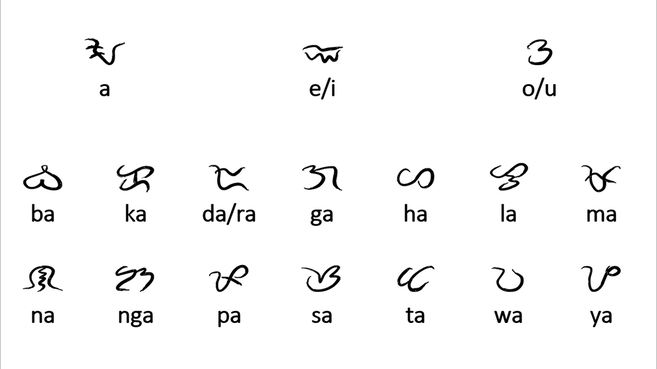
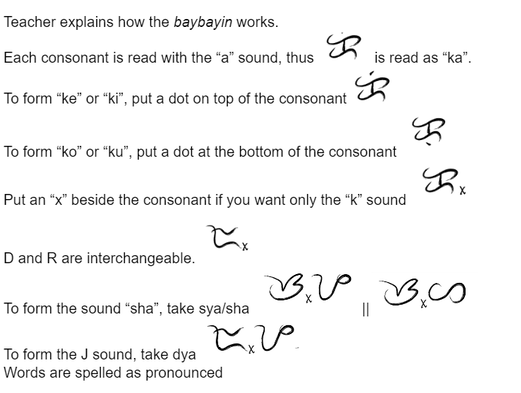
Teacher asks the student to create a bookmark with baybayin script and decorate with beads, ribbons, glitter and other materials.
|
Students learn how to write their name in baybayin. Here are a few example
Rebecca, would be: Debeka(baybayin)

Sharon, would be: Syadon(baybayin)

John, would be: Dyan(baybayin)

Charley, would be: Tsarli(baybayin)

|
Culminating Activity: Balanghay Exercise
|
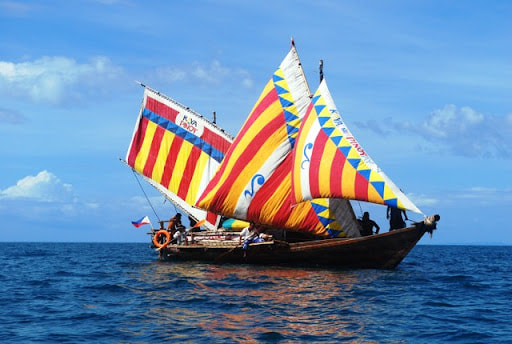
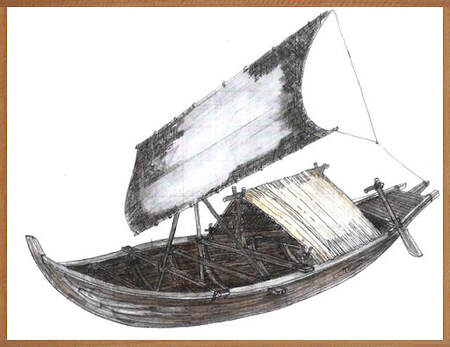
Just like the first voyagers who arrived in Hawai’i in vessels called Hōkūleʻa, our ancestors arrived in the Philippines on vessels called the balanghay.
|
Ask the following questions:
Who were the first people who lived in the Philippines? What do you think was their purpose? Who did they travel with? What would they have brought with them? What do you think were their first years like? What do you think were their plans? |
Teacher asks students to submit the following homework with this prompt:
|
|
Create your own balanghay that represents your personal journey. The sail should have your name written in baybayin. The designs and colors should reflect your background and the things that are relevant to you.
Answer the following questions in your essay:
Who are you? What sort of traveller are you?
Where are you from?
Who are in the balanghay with you? What will you take with you?
Where are you headed?
The answer to these questions should describe your philosophy in life.
Answer the following questions in your essay:
Who are you? What sort of traveller are you?
Where are you from?
Who are in the balanghay with you? What will you take with you?
Where are you headed?
The answer to these questions should describe your philosophy in life.
