Module 15: Come on a Journey with Us/
Halika, Biyahe
written by Jayson Parba
Background
Traveling has lots of benefits. By going to different places, not only will you get to experience different cultures and eat delicious food but also meet new people with very different perspectives. Traveling changes you.
Motivating Activity
|
Ask the students to describe their favorite travel memory or destination.
|
Processing Activity
Guide Questions for Discussion
- What do you know about the Philippines? Have you ever traveled to the country?
- What are some of the popular places that people visit in the Philippines?
- Have you ever tried any Filipino food? Describe the food you tried and tell us the occasion when you had it.
- Teacher introduces the idea that the Philippines may often be perceived as a small country but it is not. The graphics below may be used to illustrate this point
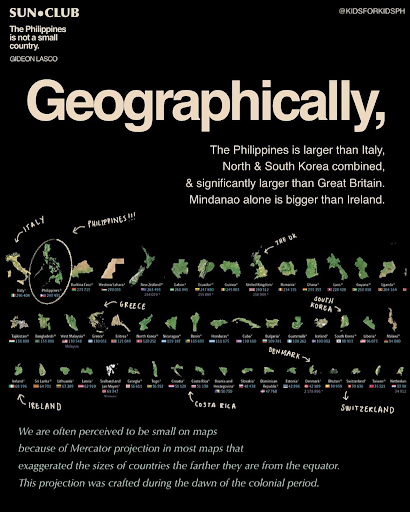
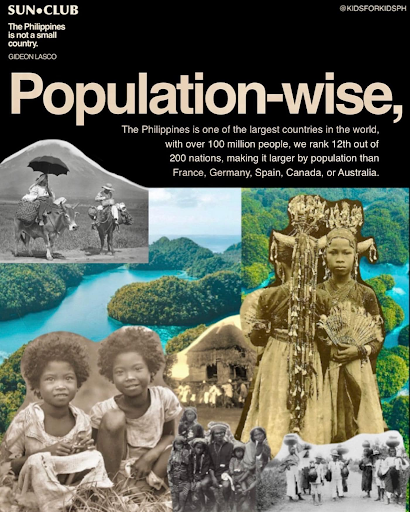
The teacher introduces the following fun facts about the Philippines:
- Filipinos describe their society as the product of "300 years in a convent and 50 years in Hollywood," but over the centuries immigrants from China have had more influence on business and society.
- It is the third largest Catholic country in the world after Mexico and Brazil.
- Many Filipino dishes and ways of cooking them have Chinese influence, although foods for special occasions often have Spanish roots.
- Filipinos often have Spanish last names although many of them have American sounding first names. - The Philippines is diverse. Filipinos are multilingual and multicultural. There are over 180 languages spoken by different cultural communities. Some of these communities are the T’boli, Maranao, and Ifialig. The teacher may add more cultural communities and pictures.
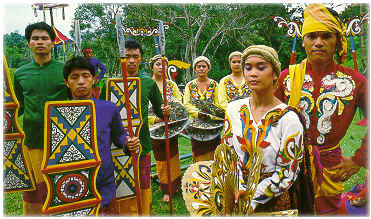
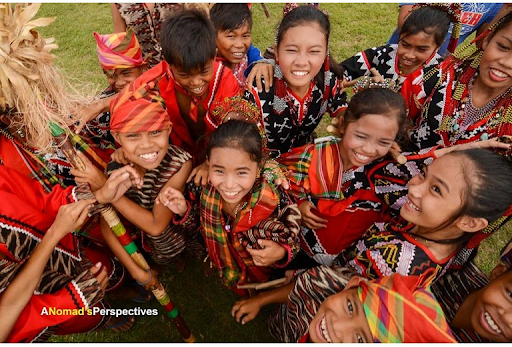

Based on the video: How did members of the tribe earn a tattoo? What was the tattoo for? What can be done to preserve the tattooing culture of the Kalinga or to remove the stigma of tattooing in Filipino culture? |
|
Culminating Activity |
Enrichment Activity |
|
Watch the film and write a summary of the video.
|
References:
- Kirk, D. (2020): A crazy quilt of culture. New York Times. Retrieved from https://www.nytimes.com/2000/11/03/style/IHT-a-crazy-quilt-of-culture.html
- Lasco, G. (2020). The Philippines is Not a Small Country: Essays on Culture, Modernity and Nationhood.
